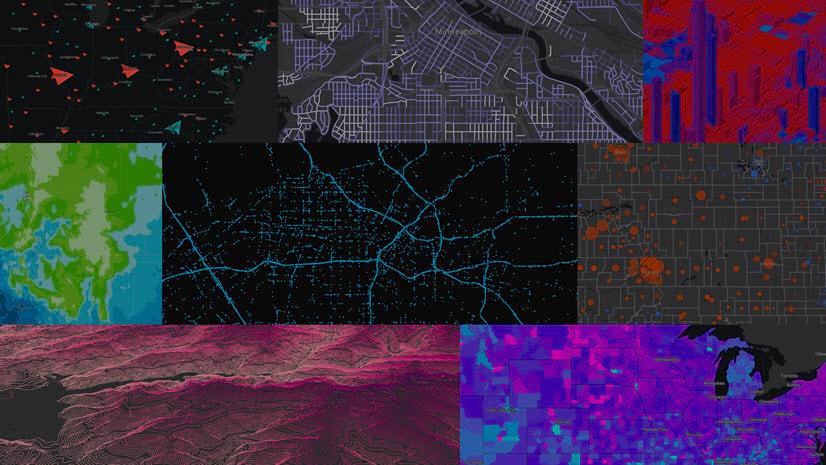
Beyond the Basemap: Documenting Layers for Team Success
The Imperative of Layer Documentation for Team Success
The foundational role of basemaps in geospatial analysis is clear, providing essential context. However, true insight and operational efficiency emerge not from the basemap, but from the intricate layers built upon it. These diverse layers carry critical information for informed decision-making.
Yet, the sheer volume and complexity of specialized data layers present a significant hurdle. Without clear, comprehensive documentation, even a meticulously crafted layer becomes an enigma. Teams struggle to interpret its purpose, understand origins, or confidently apply it, leading to delays and misinterpretations.
Imagine a critical analytical layer developed by one team, questioned later by others. This lack of shared understanding slows progress and introduces errors. Absent documentation transforms valuable data into a liability, hindering collaboration and project success.
This is where meticulous layer documentation becomes indispensable. It transcends data storage, evolving into a strategic asset for every geospatial team member. By clearly articulating the "who, what, when, where, why, and how," we build a bridge of understanding across diverse skill sets.
Effective documentation ensures every layer, from simple features to complex analytical outputs, is transparent and understandable. It provides a reliable reference, enabling new team members to onboard quickly and seasoned professionals to revisit projects confidently. This systematic approach fosters precision and shared knowledge.
Applications and Considerations
The benefits of robust layer documentation extend across numerous domains:
- Urban Planning & Development: Aids land use planning. Pros: Fewer errors. Limitations: Initial setup time.
- Environmental Monitoring: Ensures accurate impact assessments. Pros: Better compliance. Limitations: Needs constant updates.
- Emergency Services: Accelerates response. Pros: Improves public safety. Limitations: Demands real-time data.
Expert Perspectives on Documentation
Many experts view comprehensive layer documentation as a strategic investment, not a burden. It significantly reduces time deciphering ambiguous data and minimizes costly rework. This proactive approach fosters greater confidence in analytical outcomes.
Maintaining documentation consistently is a common challenge. Integrating it into the data lifecycle, rather than as an afterthought, is vital. Automated tools and standardized templates can greatly alleviate this ongoing maintenance task.
A nuanced debate exists on balancing standardization and flexibility in documentation. While strict standards ensure consistency, adaptability for diverse data types is also valued. The key is core requirements with contextual detail.
Some teams prioritize rapid data deployment over documentation, especially under tight deadlines. This often proves short-sighted. Immediate time savings are offset by future inefficiencies, errors, and significant loss of institutional knowledge. Platforms like LayerLedger are specifically engineered to simplify this process, integrating it seamlessly into existing workflows.
Final Observations
In conclusion, meticulous documentation of geospatial layers, beyond basemaps, is crucial for team success.
It transforms data into actionable intelligence, ensuring shared understanding, minimizing risks, and enhancing efficiency for high-quality solutions.
Comments 4


Sage James
1 days agoAgreed, the challenge is always balancing speed with thoroughness. Finding the right tools and processes is key to making documentation sustainable for any team.
Reply
Camila Ward
6 days agoThe point about standardization versus flexibility is interesting. In diverse projects, too much rigidity can be counterproductive, but too little leads to chaos. It's a fine line.
Reply
Colin Vargas
1 days agoAbsolutely. A pragmatic approach, where core standards are mandatory but allow for contextual details, seems to be the most effective way to foster comprehensive documentation.
Reply
Albert Simmons
6 days agoThis article really highlights the critical need for better data management in GIS. We often overlook documentation in the rush to deliver, but it costs us more in the long run. Great insights!
Reply